Not long ago, I told you a story about my peeves related to riding on Amtrak. Foolish me! The project I've been working on for the past year, which had me making regular trips on Amtrak from the Boston area down to NYC, has ended, and I now find myself having to fly to my new assignments with clients located in Denver and Dallas. I had forgotten what a dream of convenience the train is when compared to air travel. I love to fly, and I hate to fly. I've been flying since I was a small child, back in the days when all passenger jets still had propellers rather than jet engines; thinking about it makes me feel old. Every summer we'd go to visit my parents' respective sides of the family in (of all places) Denver and Dallas, and I'd sit at my window seat waiting for the ritual of the engines starting up one by one, signalling that we'd be in the air shortly. Today I still try to get a window seat on every flight because I just enjoy looking down at the landscape, even if I end up trapped, just me and my bladder, contemplating how long I'm going to wait before shaking the passengers in the middle and aisle seats awake and entreating them to stand up so that I can make my way to the restroom.
Those Were The Days
When I'd go on those family trips as a small child, a big fuss was always made about my brother and sister and I being appropriately dressed up, because that's just what you did in those days, before deregulation came in and made flying affordable for the unwashed masses. I remember when I was old enough to fly by myself how odd it felt to just turn up at the airport in my standard uniform of jeans and sneakers and flannel shirt.
Traveling In Style
But then came the eighties and deregulation and the beginning of the slow downward spiral in comfort and convenience, accelerated by acts of terrorism and culminating in the 9/11 events that have made just getting to the gate a miserable and tedious process. The pleasure of the flying itself remains; it's the whole process around it that leaves me in a state of dread at the thought of having to fly somewhere. Now that it looks like I'm entering another phase of regular air travel, I'm going to have to get used to it. My flight home from Dallas last night brought this all into stark relief. I had a reservation on US Airways to fly to Boston via Philadelphia. The security procedure at DFW wasn't too bad, and I got to my gate with time to spare for my 5:45 PM flight. Normally you board about a half hour before departure time, but when we reached that point I saw no moves on the part of the gate agent to start the long and convoluted process in which they board different categories of passengers, starting with the ones who have achieved Double Platinum Sapphire Exalted Emperor status and finishing with me, the one guy who has been relegated to the dreaded Zone 5. The gate agent did announce that the flight was oversold, and anyone who would voluntarily give up his seat could get a voucher worth $600 to be booked onto a flight the following morning. I always contemplate whether I should take the airline up on one of these offers, although it would have to include arrangements to feed, house and transport me at their expense. But invariably it's more important to me to just get home, plus I'm not sure if the travel voucher would come with all kinds of restrictions and end up being more of a hassle than anything else. Eventually the gate agent opened the door, which usually signals that we will now start boarding, but instead of propping it open he disappeared down the jetway, closing the door behind him. Five minutes ticked by, then ten, then fifteen and then eventually, about five minutes after our scheduled departure time, he reappeared. He stepped to the podium and announced that there was some mechanical issue that necessitated waiting until some part arrived and was installed, and it was uncertain how long that would take. Regardless of what the airline might tell us officially, his opinion was that people going to Philadelphia would almost certainly get there that night, but anyone with a connection was going to miss it and those of us in that category should line up at the podium to try to make alternative arrangements. I dread these kinds of situations, having found myself in them a number of times. The airline plays a little game with you in which they periodically feed you a new revised boarding time and then as you just about reach that time, they give you another new (and later) boarding time. They never actually come out and say look, folks, it's just not gonna happen tonight; instead they string you along endlessly until it's way too late to make any kind of alternate arrangement. Indeed, shortly after the gate agent made his announcement, I got an automated call on my cell phone telling me that the flight was delayed by a half hour due to "congestion at the destination", which was of course entirely different from what the gate agent had just told us. I dutifully got in line, but I also took out my phone and called US Airways customer service. I had looked up the number before I headed for the airport to have it just in case, seasoned traveler that I am. I got through to an agent who repeated the line about congestion at my destination; I told her that we got a completely different story from the gate agent. I expected her to tell me sorry, this is what's in the system (they always refer to "the system" like it's the source of ultimate truth), so just wait another half hour and then you'll be on your way. To my surprise she instead said she'll look for an alternate arrangement, but I'll have to wait on hold. So I stood there, phone in hand, wondering what I should do if I was still on hold when I got to the head of the line. As I got closer to the head of the line she came on a couple of times to tell me that arrangements were being made, please just be patient. Eventually I got to the head of the line and started letting people go past me. Finally the phone agent told me I was now booked on a direct flight to Boston on American. There was some additional step that needed to be completed that was taking longer than expected (what exactly that step was I didn't really understand, since I speak English and not airline-ese), but I was booked on the American flight that was leaving in a little over an hour, so I should head over to the gate and see the agent there with the confirmation number I had just been given; whatever that final step was, it should be completed by the time I was at the American gate. …And of course, it was not. The gate agent at American did that thing where they type a bunch of stuff into their computer terminal, then frown a lot, then tell you some totally arcane piece of information, and then type some more. Finally she told me I was indeed booked but not ticketed, as if the difference is common knowledge that any schoolboy would possess. She typed a lot more, then asked the other gate agents some questions involving more exotic airline terminology that meant nothing to me, then made a phone call. Finally she told me she was waiting for a call back; my problem was being taken care of so I should step into the waiting area until she called me back. Right… we've heard this one before. I was kind of losing hope at this point; experience has taught me that where the airlines are concerned, even the simplest problem ends up being massively complicated to resolve and usually ends with an apology but no real solution. So I was deeply relieved when the phone rang, the agent answered it and then shortly afterward called me over and handed me a boarding pass a couple of minutes before we were to start boarding. I was thankful to be holding a boarding pass in my hands now. I wasn't so happy to see I'd be boarding at the very end, meaning there was a good chance that there'd be no room for my small suitcase, and I might have to check it and then wait another half hour to collect it from the notoriously slow baggage claim in Boston, but beggars can't be choosers. But to my great surprise, the gate agent called me over while the priority passengers were just starting to board and said, "this other guy thinks he has your seat, so I want you to board right now." I was more than happy to oblige her. I took my seat but had to wonder whether they would shortly come to get me, saying sorry, but this is actually the other guy's seat, you'll have to get back off. As I sat there I noticed that there were a couple of other cases of two or even three people being booked in the same seat, which the flight attendants (When did we actually start calling them that? When did they stop being stewardesses?) were trying to sort out. I could not have been happier when they finally closed the doors and told everyone to take their seats.
What Exactly Do You Mean By "Flight Attendant"?
So all in all, my flight home was a stressful experience, as so often in the past, but it could have been far worse; I could have found myself stuck overnight in Dallas or Philadelphia, for example. All of the people I dealt with were surprisingly helpful; I'm used to just getting the company line from some customer service agent who is tired of having dealt with other people's problems all day and is now having a hard time finding the enthusiasm to deal with mine. I wonder if all of the bad press the airlines have gotten over the past decade or so for their terrible customer service is finally having an effect. I guess I'll have another chance to find out when I go to see my Denver client next week.
I was cleaning out my shed recently, going through piles of things that have been pushed from one corner to the other for years, until I finally got tired of tripping over them. I wasn't conscious of how long some of that stuff had been piling up until I started emptying out a box full of odds and ends and found a copy of the Boston Globe from August 22, 2001, before I even lived in my current house. I imagine this box came from some obscure corner of the garage in the old house and got tossed into the moving van at the last minute, then was tossed into some equally obscure corner of the new house and just sort of shifted around over the years without anyone ever looking to see what's in it. I'm bad about that sort of thing. I'm not a hoarder, but I am kind of an accumulator. That paper looked like it had never even been read, curiously enough. The edges were a bit ragged, like they had been gradually harvested by mice for nesting material, but all of the sections were still there, just as they had been delivered over a decade ago. I enjoy looking at old newspapers, seeing what the important stories of the day were years ago, thinking about what was happening in my own life at the time. This one from late August 2001 was an interesting find for a lot of reasons. It represented a time of major changes for me personally, and imminent changes for the country as a whole. Glancing at the date on that front page, I found myself immediately lost in contemplation of the events that had transpired in the year leading up to the date of that paper. In August of 2000, I returned to the US after more than a decade living the expatriate life in Germany, along with My Favorite Wife and two young kids. It was the height of the dot-com boom and I was taking a job with an Internet consulting company in Boston. I'll call it XYZ Corp. XYZ provided soup-to-nuts Internet strategy and technology consulting. They had a whole list of top-tier Fortune 500 clients as well as a bunch of fairly well-known dot-coms, and a huge wad of venture capital funding, and it looked like a pretty reasonable proposition at the time I signed on. They offered me a decent salary, plus a relocation allowance that more than covered the cost of moving my family and all of our accumulated stuff across the Atlantic. From the first day I was at XYZ though, I began having second thoughts. I had interesting projects with good clients. I had colleagues whom I found to be extremely creative and competent in their respective areas, whether it was visual design, technology implementation, business strategy development or whatever. But at the same time, I couldn't help but notice that there didn't seem to be any grown-ups in charge of all these smart and capable people. Not to blow my own horn too loudly, but at the time I joined XYZ I had undergraduate and graduate business degrees and twelve years of pretty solid work experience under my belt, a third of it in a Big Eight consultancy (back in ancient times when there was such a thing…) and the rest in an international bank. I had run a department of 12–15 people and managed million-dollar budgets and project teams that were distributed across the globe. I had connections with peers in major corporations throughout the country and the world. I had to develop budgets and manage to them, hire and motivate staff and interact with people at fairly high levels of the company. I don't think I was even conscious of how much business experience I had accumulated until I worked at XYZ and observed how the company was being run. To me, it looked our management was engaged in some kind of race to the bottom, in which the objective was to see who could shovel the most cash out the window before it all ran out. Crazy amounts of money were spent on stocking the kitchens on every floor of every building, from which employees could help themselves to unlimited quantities of cereal, soft drinks, cookies and other treats. There were pool tables and foosball tables and other toys. People who had been with the company for half a year had piles of company-branded clothing and trinkets. Food was ordered in for every lunch meeting, of which there were plenty. The building I worked in, which had been remodeled from industrial space at a cost of millions of dollars, was home to hundreds of office chairs, none of which had cost less than around $800. People flew at the drop of a hat all over the country for pointless meetings, staying in the finest hotels and eating in classy restaurants. Nobody seemed to notice that projects were staffed with way more people than could have possibly been profitable. Nobody seemed to know or care what a budget was. Clearly this was going to end in tears. That's not to say that XYZ was necessarily run substantially differently than a lot of the "hot" companies of the time. I never really accepted the concept that seemed to be prevalent at some of the major dot-coms, namely, that giving things away is somehow a promising business model. I kept hearing phrases like, "It's about the eyeballs, man!", meaning that people looking at your web page would somehow translate into a large and constant stream of cash into your pocket, through some magic that nobody ever really satisfactorily explained to me. The epitome of this kind of thinking for me was a company called Kozmo.com that operated in some larger US cities, from which you could order things like CDs or snacks and they would deliver it to you for free; I didn't see how a service that would cart a pack of gum halfway across New York City for free could possibly be making money, unless maybe they were charging you $10 for that pack of gum that was making its way to your door without any delivery charge. Hearing about this crazy scheme left me scratching my head and thinking that maybe the Internet joyride was approaching some kind of climax.
Of course, there was plenty of funny business going on throughout the economy back then; it wasn't confined to dot-com start-ups. I remember one meeting we had with representatives of Enron who were trying to sell some new technology service to one of our clients. I subsequently advised our client that what the Enron guys were peddling looked to me like some very expensive vaporware that could not possibly deliver the level of service they claimed it would, given the underlying technical infrastructure they described to me. Little did I know at the time that this was not some anomaly, but rather the way the whole company worked. It was not long after that that Enron spectacularly imploded.
It was fun while it lasted!
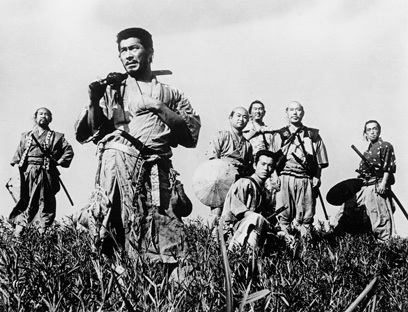
So end in tears it did. The first tears came in the spring of 2001, when a number of my coworkers came in one day to be met by security guards who stood over them while they packed up their personal stuff in a waiting cardboard box and then escorted them out the door, never to return. Following the exit of our now unwanted colleagues there was a company-wide meeting in which one of the company founders announced to the remainder of the now somewhat disoriented staff that we had to do an unavoidable "reduction in force" (RIF) in order to get leaner and be competitive, but the rest of us had nothing to worry about; we had been suffering a bit from the loss of clientele from the dot-com sector, but we still had lots of big projects with major clients from more traditional industries and this would shield us from the recent "downturn in the market", and so forth and so on blah blah blah. Later that day the same guy came to chat with the project team I was working with and asked a few of us if we wanted to join him in XYZ's VIP box in what was then the Fleet Center to watch the Bruins play hockey. I politely declined, thinking there is clearly a problem of priorities here and I don't really care to be part of that. I was reminded of the old saying that a fish stinks from the head down. I think there were six or seven RIFs (or mass firings, as I preferred to call them) that followed in the ensuing months. The second one was somewhat less traumatic than the first, though not by much. By the fourth or fifth one a combination of resignation and gallows humor was the order of the day, and nobody seemed particularly surprised to come to work one day to learn that his number was finally up. People just sent a last farewell email with their private contact info, gathered up a few things and left. By then the company had long since dispensed with the whole security guard thing. The first people to go were mostly the younger ones with the prominently displayed, ridiculously elaborate tattoos and the geek-as-fashion-icon horn-rimmed glasses. One could feel the median age and experience level of the company drifting steadily upward as the hipness quotient declined somewhat. But even if you were one of the older and more experienced consultants, if your latest project came to an end and you didn't have a new one to start on, i.e., you were "on the bench" in consultant-speak, the chance that you would be out the door fairly soon was high. I would like to think that it was due to the indispensable quality of my own skills and experience, although I'm sure sheer dumb luck played a major role as well, but for whatever reason I somehow managed to hang on until the bitter end. That came when XYZ finally threw in the towel and declared bankruptcy in August of 2011. Even then I was actively engaged on a project for one of our remaining clients. It was entirely unclear what was going to happen next. I probably never got around to reading that August 22, 2001 edition of the Globe because I just had other things on my mind at the time, one of them being the fact that as my one year anniversary at XYZ approached, it was clear that there was not going to be a two-year anniversary. But just like in the movies, when it looked like the situation had reached its most desperate, help arrived to save us. In this case the movie was Seven Samurai. Or more like Seven Sararimen, I guess.
We have come to save your company.
Let me explain. At some point senior XYZ management must have realized that if they were going to keep the party going, they were going to have to find some new dupes investors. Somehow they managed to get a major Japanese industrial company (I'll call them J Corp.) to take a minority stake in XYZ to the tune of an eight-figure investment. As XYZ went belly-up, J Corp. bought out the remaining assets of XYZ and founded a new, wholly owned subsidiary which I shall call Phoenix (because it rose from the ashes of XYZ… get it? Clever, huh?). So along with a little more than a hundred of what had been 800 employees in XYZ's Boston office at the time I joined, now I was a happy, or at least relieved, employee of Phoenix. To be continued (whenever I get around to it)…
The one-year anniversary of my trip to India is approaching, so I guess I should haul this half-finished post out from under the couch cushions it seems to have gotten lost under for the better part of a year and finally finish it. I'm glad I unexpectedly found it in there, along with the loose change and the icky old hairbrush. I really should vacuum that out more often.
So here's the story. The consulting company I work for has an office in Pune, India. During the approximately two years I'd been with the company at the time of my trip, there were many people in Pune with whom I'd emailed and spoken on the phone, in some cases on an almost daily basis, but never actually met face-to-face, save for the few who have occasionally come to the US for management-level meetings or to work on a project. Periodically I contemplate what a weird facet of modern life it is to have this close and longstanding working relationship with so many people while not having the faintest idea of what they might actually look like.
Back in the 1990's I worked for a large international bank, where I managed engineering and maintenance of various IT security systems. That also necessitated a lot of cross-border interaction by phone and email. To promote collaboration I would occasionally take trips to some of the international offices to meet people in person. Sometimes my counterparts and I would coordinate a week-long meeting of people from the various global offices in some single location. Since we were spending company money to do this, there was always an agenda of dull presentations and discussions during the day, but the real value of the event was just hanging out together in the evening and getting to know each other, usually while consuming significant quantities of adult refreshments (something for which my British colleagues generally displayed a particularly outstanding proficiency). With this in mind, I agreed with my present boss that it would be a good idea to finally visit the Pune office and meet everyone in person.
Apart from that, over the past decade I have worked with so many people from India that I've had a general curiosity just to see what things look like there and to get a sense of what life is like where they come from. Also, I really like Indian food.
Curiosity notwithstanding, I was kind of apprehensive at the same time. For one thing, it makes no sense to make a long trip like that in anything less than a week, and I knew that while I was gone, it would be hard to maintain contact with the clients and project teams I'm responsible for here in the US. No doubt I would end up working a lot of long hours after my return to catch up again. Also, it would be likely that at least part of my travel would have to happen on a weekend, and those limited free days I have during the week are extremely precious to me. And then there was the matter of the travel itself; back in my banking days, I could fly business class on international trips, but those days are long gone. Nowadays I have to fly coach everywhere, and even a flight of a couple hours in length can be torture, so the thought of a 14–15 hour flight in each direction to Mumbai and back (Mumbai being the closest international airport to Pune) left me in a state of profound dread.
But anyway, it came to pass that I finally set a date. This was not done without some deliberation, because, at least if you are traveling from the Land of the FreeTM, you don't just hop on a plane and go there. First, you have to have a visa. Interestingly, to get a visa for India, you don't go to the nearest Indian consulate because, irony of ironies, they have outsourced that process (to a company called Travisa which, incidentally, processed everything fairly quickly and efficiently). Second, you have to get a bunch of immunizations for things like yellow fever that are pretty unusual here but not so uncommon there. The doctor who gave me the shots (a whole bunch in each arm, all at once, leaving me feeling like a pincushion) also gave me a prescription for anitbiotics to take before, during and after the trip as prophylaxis against malaria, plus some extra-powerful antibiotics which I was to take in case of a prolonged episode of severe diarrhea. The curious thing about the latter pills is that the bottle came with a warning sticker to admonish me that a possible side effect is—guess what?—severe diarrhea. There's something to ponder.
I ended up taking the trip when I did after I., a colleague who is the other senior project manager in the US operation and had been with the company even longer, mentioned that he was way overdue to finally visit the Pune office for the first time and was probably going to go at the same time that R., our company CEO, was planning to make one of his quarterly visits. I suggested that we make the trip together and, having heard about this, R. decided to ask T., a new PM, to make the trip as well and we would turn the week into a US-India company project management summit with a structured agenda. R. would already be in India when we got there, so I., T. and I would meet in Newark, NJ to take the same direct flight to Mumbai and back.
And thus did it come to pass that, armed with my visa and my drugs, I finally embarked on my trip. I can indeed confirm to you that 14 hours is a loooooong time to sit in an airline coach seat. I was lucky on the trip over insofar as I had a window seat and the middle seat was empty, so I had a little extra room and didn't have to engage in one of those subtle but determined battles with the person sitting next to me for control of the armrest.
The coach seats also featured individual video displays offering a pretty wide variety of different movies and TV show episodes. This was good, because I have an extremely hard time sleeping on planes. I didn't want to sleep anyway, because I was going to be arriving around 9 PM and I didn't want to get there so well-rested that I would be wide awake for much of the night. I think I watched four different feature-length movies that I probably would never have watched otherwise.
The only thing I was a little annoyed about was that the crew insisted that the passengers in the window seats keep their shades closed so that anyone who wanted to could sleep, as we would be in daylight for much of the trip. Given a choice, I pretty much always book a window seat on a day flight because I enjoy looking at the landscape. I periodically flaunted this ridiculous rule to see at least some of the sights. Among other things, I managed to get a fairly impressive view as we flew over Afghanistan; it was interesting to see high peaks separating valleys in which it looked like every usable bit of space had been carved up into agricultural plots.
Sitting there on that long flight, I had to think back to a time in the early 1980's when My Favorite Wife (at the time My Future Wife) was in Germany and I was in the US as we completed our respective university studies. During the summer and the winter break I would visit her by taking direct flights between San Francisco and Frankfurt which, if I recall correctly, were also a good 12–13 hours in duration. That was back in the days before personal entertainment systems, before laptop computers and before iPods. I can't remember if the Walkman was around yet, but I didn't own one if it was. In those days, if you were lucky, you might be close enough to one of the few video monitors to be able to discern what was going on in the one movie that would be shown. So relatively speaking, I felt pretty pampered in the entertainment department on this flight, although I think the legroom was slightly (slightly!) more generous back then.
Arriving—finally!—in Mumbai, my colleagues and I went through immigration, collected our baggage, passed through customs, changed some money and set off to meet our destiny. As we exited the secure arrival area, we found ourselves in kind of a large corral-like area that was ringed with metal barriers, over which the drivers from various limousine and car services had hung little tablets bearing the names of the people for whom each driver was waiting. We searched among the 70 or 80 such tablets for our own names, as arrangements had been made for a driver to pick us up at the airport and bring us to the hotel in Mumbai where we were to spend the night before heading out to Pune the following morning.
Before long we located what turned out to be two drivers who were waiting for us. The drivers insisted on labeling our luggage with little tags bearing our respective names and giving us corresponding receipts. There was immediate confusion, as the drivers couldn't quite understand which one of us was Mr. Charlie, Mr. I. and Mr. T. Finally this operation was completed, though. Then, before getting into the car, one of the drivers opened up a little ice chest he had in the trunk of his car and, with a flourish, asked us if we would like a Diet Coke. This was done with such ceremony and enthusiasm that I had to say yes, even though I have an intense dislike for the weird metallic aftertaste of diet sodas.
I started to open my complimentary beverage, but then I remembered something about which I had been admonished repeatedly by seasoned India travelers in preparation for my trip. The contents of that can of soda were almost certainly safe to drink, but where had it been before I took possession of it? In our driver's cooler, of course, swimming in partially melted ice. And with what water had that ice been made? Better not to put my lips on the outside of that can. I stuck it into my laptop bag, which the drivers had not succeeded in wrenching from my hands, and got into the car. My two colleagues got into the other one of the two cars that had come to collect us.
The driver was a nice guy who engaged me in conversation throughout the short trip to the hotel. Where was I from, he wanted to know. "Boston", I told him. "Ah, Boston," he said, with a touch of longing in his voice. "You know Boston?" I asked. He told me he had never been there, but from driving American visitors around, he knows about all of the major US cities—Boston, New York, Orange County, Texas…
That trip from the airport to the hotel was my first experience with driving in India. As in the UK, Indians drive on the left side of the road rather than on the right, as we do in the US; that was already a little disconcerting. The traffic was heavy, even though it was around 11 PM, and we seemed to be driving down one (sort of) paved road after another in what looked to be a gigantic construction site; apparently the Mumbai Airport is building some kind of elevated railway through its entire site, which is enormous. From what I could tell during that first short trip, the only traffic law they have there is the law of the jungle. More on this later.
We got to the hotel and attempted to collect our baggage from the cars, but the drivers would not have it, insisting on carrying the bags into the hotel for us. I hate this kind of thing; I feel very uncomfortable being pampered in any way. Maybe it's my American ethic of self-sufficiency on the frontier, or maybe it's just my liberal guilt, but I can't stand the idea of someone carrying my lugagge for me. The Young Master would probably say it's just because his father is a cheapskate, which to some extent is true—in hotels, for example, I get a little irritated when some bellhop joker insists on putting my little suitcase, the same one I've already trundled behind me for miles through the airport, on a little cart that will travel from reception to my room on the third or fourth floor and then stands around expecting a tip for this utterly useless service. But world traveler that I am, I figured this is the way they do it here, so I'm not going to fight it.
Checking in was a long and complicated process. In the US I am accustomed to handing the person at the front desk a credit card and (sometimes) a driver's license, and it takes only a few minutes for them to locate my reservation, check me in and hand me my key card. (It's been a really long time since I was given an actual room key at a hotel instead of one of those credit card-sized key cards. The cards are more convenient, and no doubt more cost-effective for the hotel, but why do they always insist on giving me two key cards unless I specifically say I only want one?) In the last couple of years I stayed in hotels in Europe, check-in speed was comparable. But in this hotel I had to fill out a big form and sign or initial what seemed like an absurdly large number of places in the form. It took around fifteen minutes for the whole process. Rather than handing our key cards out to us, the lady at the front desk then insisted on accompanying our whole party of three to show us where our respective rooms were and open each door for us. I don't know, maybe to her we looked like a bunch of helpless yokels with no knowledge of modern door technology. I think it took a good 40–45 minutes from the time I walked up to the front desk until I was finally alone in my room.
It was a nice hotel that the company had reserved for us. Often when I first walk into my room in a nice place like that, the TV is already turned on and tuned to an information channel; it might have some kind of "Welcome Mr. Charlie" message on it, or it might be advertising the on-demand movies or maybe some local attraction or other. True to tradition, the TV in this room was on, but it was showing a shampoo commercial when I walked in. Then came another one, and then one for hair conditioner, and then another shampoo commercial, and then the cycle repeated. I wondered if was tuned to The Shampoo Channel. Each commercial featured a model with a head of long, full hair that sort of waved and billowed in an obviously computer-animated sort of way. The commercials were slickly made but to the point of being kind of over-produced and just sort of weird, at least for my taste.
I Wish My Hair Could Do That
I was pretty puzzled about the shampoo connection, but then I went into my bathroom and saw that it was well-stocked with samples of many of the company's hair care products. That's when I noticed that the shampoo is manufactured by a company called ITC, which I guess is one of those conglomerates that is involved in just about every imaginable business, including operating the fancy hotel in which I was staying. An interesting application of cross-selling, I guess.
After turning off the TV, the next order of business was to take a shower, brush my teeth and hit the sack. This posed a potential problem that we here in the US don't normally consider: What about the water—will it hurt me? It looked fine coming out of the tap, but who knows what invisible creatures might be lurking in there, waiting to work their magic on my insides. I didn't want to begin my trip with a major intestinal event. I decided I would shower normally, taking care not to get any water in my mouth, then brush my teeth using bottled water.
Another thing I learned later in my stay is that you have to be careful with even the bottled water. To be more precise, you need to be certain that the seal on the bottle hasn't been broken, as it's not entirely uncommon, especially in tourist-class hotels, to be given bottled water that is just water from the tap that's been filled into a used plastic bottle.
Having survived the night, the next morning I went down to the breakfast room, met my traveling companions and then the colleagues from Pune who had been sent to collect us. We didn't go straight to Pune, though. First we had to go with our local colleagues to the office of some other company that had just installed the same line of office furniture that our company was thinking of buying for the new building that we would be moving into soon, so that they could see the stuff in action. I can assure you after this experience that looking at office furniture in India is just dull as looking at office furniture here at home.
The trip to Pune, once we got our stimulating office furniture viewing excursion behind us, was somewhat more exciting. As I was soon to discover, pretty much all driving in India is exciting. About the only rules I was able to discern were (1) drive on the left side of the road and (2) honk whenever you pass another car. Beyond that, it's every man for himself. The roads are populated with a colorful mix of cars, trucks, motorcycles, buses, three-wheeled motorized rickshaws, an occasional bicycle and a few random cows thrown in just to make it interesting. I didn't have a vantage point from which to get a wide shot of traffic, so here's a taste from someone else's YouTube video:
Don't Try This at Home
What doesn't come across in that one, though, is the unbelievable racket of traffic. I am often on conference calls with my Indian colleagues, and sometimes it's hard to understand them through the incessant honking of car horns in the background. I always assumed that they must be speaking to me from a conference room that's right next to a road and that they must have all the windows open. Once I got there I saw that no, they have always been calling from inside an interior room in a building that has a farily reasonable setback from the street; it's just always that loud, I guess. Here's a short snippet of video I shot during the drive between my hotel and the office, for illustration.
Driving Through the Wall of Sound
You will probably notice in the above videos that two-wheeled transportation is pretty prevalent. The cost of even a small car is beyond the reach of many middle-class Indians, but they can afford a motorcycle or scooter. It turns out that you can fit a lot more people onto a motorcycle than I previously would have thought possible. It's not at all unusual to see a family of four or five traveling on a single two-wheeled vehicle. Also, the traditional women's garment, the sari, is not exactly motorcycle-friendly, so you frequently see women riding side-saddle on the back of a motorbike. Helmets are of course optional for all concerned.
Biker Chicks of the Subcontinent
I did all my traveling in one form or another of four-wheeled transport. Most of the time I was in a taxi or a car hired by the company, but I went for a few rides with colleagues who had cars. I would not even consider driving on my own without a lot more acclimation to the local driving practices. But if I did ever have a car there, it would almost certainly have a little idol of Ganesha, the elephant-headed god, on the dashboard. It's the Hindu equivalent of the St. Christopher medal or the plastic Jesus dashboard figurine I recall from my youth (I can't remember having seen either recently, but maybe it's because I live in godless Massachusetts). I don't think I was in any car during my visit that was not under the protection of the elephant man.
I Don't Care if it Rains or Freezes
Ganesha also has his own little shrine in the company office I visited. Coming from a country in which we bend over backwards to avoid any overtly religious symbols in the workplace, this was sort of a surprise, but I'll guess that over there it's pretty much standard practice to enlist the God of Success and Remover of Obstacles to help keep an eye on your business.
The Remover of Obstacles Will See You Now
While I was speaking with one of my Indian colleagues about how he spends his free time, he mentioned that among other things, he goes on little excursions with his kids to visit various temples and perform the associated rituals. He went on to philosophize more generally about how important it is to him that they grow up with the proper devotion to their religion, so that they will turn out to be good, upstanding people. What, with no Jesus? No Moses even? People I've spoken with back home about the various religious expressions I observed on my trip find them amusingly weird, in a "How can those people believe all that crazy nonsense?" sort of way. I won't say that I don't share that sense of bemusement to a certain degree, but then as a Hebrew-American, I grew up fairly accustomed to being surrounded by people who believe, with varying degrees of conviction, in systems of supernatural order considerably different than the one I was raised with, so it wasn't a totally unfamiliar experience.
To us westerners, the notion that saying prayers to a little statue while rubbing it with butter and spices, and offering it food and money, could be the way to achieve eternal salvation sounds pretty crazy. But then, here at home I live among a considerable number of people who will tell me, in all seriousness, that salvation is at least partially the product of periodically consuming wine and crackers that have been literally (not just symbolically) transformed into the blood and body of their deity of choice. The more devout members of my own tribe will lay out for me, in excruciating detail, why it is that I can separately consume cheese or a burger, but by order of the Almighty himself, under no circumstances may I eat a cheeseburger. As far as I'm concerned, when it comes to explaining how the universe works, we all have our own familiar brand of crazy, and treat it as the baseline from which to judge everyone else's chosen brand of crazy to be a bunch of crackpot foolishness.
It was fun to finally meet in person so many people I have emailed with or spoken to by phone but never actually seen. They all seemed really excited to have me and my other two colleagues there; many of them have been to the US for varying lengths of time, but it's not that often that anyone from the US side of the company comes over to spend any time with them. They extended a tremendous amount of hospitality, especially in the culinary department. We went to a lot of buffet-type restaurants where I got a chance to sample all kinds of good stuff. I like Indian food a lot, so this was one highlight of the trip for me.
While enjoying this culinary extravaganza, it was hard not to be conscious of being surrounded by people who would have been thrilled just to have the scraps off my plate. Not that there are usually any scraps left on my plate, having grown up under the influence of the "clean your plate, mister" philosophy, but you know what I mean. Hundreds of millions of India's approximately one billion people live in pretty severe poverty, and you don't have to look very far to find it. Just a block from my hotel there was a kind of shantytown built along an open drainage ditch in between some more middle-class apartment buildings; driving past it on the way to the company office, one of my colleagues expressed considerable shock at the sight of a half naked guy who was apparently "bathing" by scooping up the murky grey water in a pan as it flowed by and then pouring it over his head.
The same daily ride to the office took us by a traffic island sheltered under a sort of highway overpass, a space maybe twenty by thirty feet in size, which appeared to be the open-air camp of a clan of around twenty or so people of assorted ages. When traffic was slow, a group of three or four small children, a couple carrying infant siblings, would wander out from their camp and into the traffic, begging for food or money by hammering on the closed windows of the cars that were stuck there waiting for traffic to start moving again. You think you have problems? Don't tell me about it.
How the Other Half Lives
What a relief to finally be in the office, where the houseboy (a kind of company servant, or go-fer, apparently a standard fixture in many Indian offices—his name escapes me so I'll call him Rakesh) would greet us with a large bottle of cold water or, sometimes, a Diet Coke. After being there for a few days, I started to wonder about this Diet Coke business. Did I say I hate that stuff? It started with the one the driver offered me on the way out of the office. Then there was Rakesh with his frequent offers of Diet Coke. Also, one night when my two traveling companions and I ventured out on our own to get some food, the semi-upscale place we ended up in had no fizzy drinks of any kind on its menu save for—what else—Diet Coke. I eventually asked R., who has spent a considerable amount of time in India, why everyone wants me to have a Diet Coke. He just shrugged and said, "It's what they think white people like." It's interesting to be on the receiving end of a cultural stereotype when you're not used to it. On a similar note, it also took some persuasion to get Rakesh to bring us Indian food for lunch instead of the horrible stuff he was bringing in from the local Pizza Hut franchise.
The whole business of considering what to put in one's mouth and what not was probably the biggest challenge of the trip. One day we were going to have lunch brought in for a meeting and were asked by Rakesh what he should get for us. "Something that won't kill us", one of my American colleagues joked. We Yanks all laughed; the Indians in the room nodded knowingly. Several US-based Indian colleagues called or emailed us during the trip to ask whether anyone had gotten sick yet; this may have been out of concern for our welfare, but I'm guessing that they had money riding on who would be the first of us to experience a sudden and spectacular gastrointestinal meltdown in a meeting.
At one point I was speaking to one of my colleagues who had relocated back to India after having spent three or four years in the US. I asked him how long it took him to readjust to the water, expecting to hear that he had problems for maybe a couple of weeks. "Six months", he told me. I had that in the back of my mind when, on my last night in Pune, rather than using bottled water to wet my toothbrush I absentmindedly wet it under the running tap and then began brushing my teeth. I imagine my eyes were about as wide as a pie plate when I suddenly realized what I had done and began frantically rinsing my mouth with water from the bottle.
Besides that one colleague, I spoke to a few others who had been living in the US and then relocated back to India. Interestingly, none of them said it was because they thought they had a better quality of life in India; invariably it was because they needed to care for elderly parents or had other family obligations that made relocation unavoidable. Otherwise, they would have been more than happy to put down roots in the US.
Sadly, it is becoming harder for them to do that anyway. Since the banking crisis of 2008 and the ensuing recession, it has gotten harder and harder for the company I work for to get any kind of visa to bring people over to work in the US. Now, the latent conservative in me says that's only right; we should be filling those jobs with unemployed American citizens and not Indian immigrants. But the fact is, in the case of our company at least, we have a hard time finding people with the specific skills and training needed to fill a lot of open positions, so if we don't get a visa to relocate one of the Indian staff to the US—where, I should add, they receive a market-rate US salary—that means a project that does not get sold, value that does not get generated, and taxes that do not get paid on the associated personal and company earnings. I could probably spend a couple of pages reflecting on the political conclusions to be drawn from that, but buried in there somewhere are some implications for both immigration and education policy that deserve consideration.
Being there also put the whole globalization discussion in a slightly different perspective for me. There are many in the US who worry that countries like India and China will somehow overtake us economically, draining our jobs through their massive populations and their cheap wages and rendering us irrelevant. I have never been to China, but after spending a short time in India I can say that yes, that is a dynamic and striving society, but it has quite a ways to go with respect to development. Poverty and disease remain widespread, corruption was a constant topic on the TV news I had on in my hotel, and much of the infrastructure I saw while I was there was in a pretty sorry state. At the same time, I know that our company is seeing a steady rise in the salaries we have to pay the Indian staff due to stiff competition for what are still limited skills sets, so while the wage differential between US and Indian salaries remains significant, that gap may be much less significant in the future. I don't want to generalize too much from spending a week in one small city, but I came away with an impression that while they may be eating our lunch someday, it won't be tomorrow or the day after.
And that's my story. I look forward to going back sometime when I can spend a little less time in offices and a little more time seeing the sights.
We've been a one-car family pretty much forever. Most of the driving is done by My Favorite Wife, who has multiple teaching and tutoring jobs that keep her constantly on the road. My own driving is mostly confined to the weekends, since during the week I'm either working out of my home office or traveling longer distances using various forms of client- or employer-funded transportation such as planes, trains and taxis, so having a second car always seemed like kind of an unnecessary luxury. Sure, it would be nice, because there are times when MFW needs to be in one place that's only accessible by car at the same time that I or one of the kids need to drive somewhere else entirely, but we've generally managed to live with that inconvenience.
At the same time, the family minivan is over ten years old now, and it's questionable how much longer it's going to last. We seem to be spending money on one costly repair after another, and I worry about MFW getting stuck on the road somewhere. So recently we bought a new car (actually the first new car I've ever owned; even with rising income I've still mostly bought late-model used cars). We still have the van, so for the first time ever we are a two-car family. Wow, what a difference! I am overwhelmed by convenience.
The best thing is this: When I travel for business, I can now drive the van to the airport or the Amtrak station and leave it parked there while I'm gone, which previously wasn't an option, because MFW needed it. But more importantly: I can drive home in my own car and don't have to take a taxi.
There are few things I dread more than the taxi ride home from Logan Airport. When I step off a flight at 10 PM on a Friday night I just want to go home. Right away. But instead I have to go stand in line at the taxi stand with a couple dozen other cranky travelers and wonder when it will be my turn. Once in the cab, I will have to explain to some guy who barely speaks English where I want to go, and remain alert throughout the trip to ensure that we actually end up there. I'm accustomed to dialogues like this one:
Me:
See that street up there on the right? You need to turn onto that one.
Driver:
(Ignores me as he continues the cell phone conversation that he's been carrying on in some obscure language ever since we left the airport.)
Me:
(More loudly this time) Hello?!
Driver:
(Temporarily pausing his conversation): Wha?
Me:
(Speaking slowly) I want you to turn right onto the next street.
Driver:
Here right? (Yanks wheel suddenly to the right, sending us careening toward the curb.)
Me:
NO! At that street that's coming up!
Driver:
Turn right?
Me:
Yes! See where that car ahead of us just turned?
Driver:
Yes.
Me:
You need to turn there.
Driver:
OK. (Continues on a trajectory that implies we will not be turning right any time this evening.)
Me:
Here! Here! Turn right HERE!
Driver:
(Hits the brakes and makes a screeching right turn into the street.) OK.
The trip to the airport doesn't bother me at all, I guess because for that trip the driver knows exactly how to get there and there's not much to be explained beyond which terminal I want to go to. I really don't mind riding in taxis in general. I have had the opportunity to do it in many parts of the world. Here are a few recollections of some of those experiences.
I've had mixed experiences with New York City taxis. I periodically go there on business and take the subway where possible, since most of the places I need to go are near a station and it's comparatively convenient. Occasionally I take a taxi, though, especially when I have to travel between two points that would require me to change multiple times or walk a very long way from the last station to my final destination. I once heard Jerry Seinfeld say in one of his routines that apparently the only thing you need to get an NYC taxi license is a face, and I can vouch for that. During the day the traffic limits the speed at which you can drive through the streets of Manhattan, but at night, when the traffic dies down, the excitement starts as soon as you step into a cab.
Your Life Is In My Hands
I rarely fly into New York, since I can take Amtrak from where I live into Penn Station in the heart of Manhattan. But there was a time when I worked for a big bank in Frankfurt, Germany and had to go to NYC about every two or three months. MFW worried and worried about me flying that transatlantic route, but I always told her that it was nothing to worry about; the only really dangerous part of the trip was the cab ride from JFK into the heart of the city, and I wasn't kidding about that. Most of the drivers drove like maniacs, passing other cars and weaving in and out of lanes like we were competing in the Daytona 500. Most of them were peculiar characters of one kind or another.
There was the guy who was barely tall enough to see over the dashboard but drove with his seat tilted way back, one hand on the wheel, while with the other hand he squeezed one of those spring-loaded hand exercisers through the entire ride. There was the greasy guy with the generic Eastern European accent who argued with me for fifteen minutes at my destination that there was some exorbitant "special tip" included in the price. There was the clueless guy who, when I said I needed to go to the Sheraton at the corner of 7th Ave. and 52nd St. asked, "Where's that?" (For an NYC cab driver this should be about as hard to find as his left knee.)
The strangest driver I remember was the African guy who went shooting up the expressway from JFK toward Manhattan and then a few minutes later suddenly veered off it into the parking lot of a gas station/convenience store. As he jumped out of the car, he said something that sounded like, "I need some water for my eyes," but I wasn't sure whether that was what I had heard. A few minutes later he got back in the car with a bottle of cold water. He unscrewed the cap, put the open mouth of the bottle over one eye, and then tilted his head way back, sort of like he was trying to drink through his eyeball. He repeated the procedure with his other eye, then a few more times with each eye as I sat there dumbfounded. Finally he screwed the cap back onto the bottle and as we raced back onto the expressway he explained sort of matter-of-factly, "It helps me stay awake when I'm driving."
Living and traveling in Germany for many years, I had the opportunity to take a lot of taxis there. The only way I can think of to describe them is that they are mostly mid-sized Mercedes cars that are clean, efficient, reliable and very dull. Almost everywhere I've been, taxis are painted in bold colors, probably so you can spot them easily on the street, but German taxis are always a nondescript beige color.
Reliable, Comfortable and Dull
I had a few opportunities to take taxis during a trip to Budapest, Hungary in the early 1990's. I don't remember much about it other than that they were little boxy things, no doubt one of those licensed Fiat models that were built in Poland or maybe there in Hungary, and it took us forever to get anywhere because traffic was in a permanent state of gridlock. On top of that I think the drivers took us foreigners way out of the way to collect a higher fare, because it seemed like we took incredibly roundabout routes to get to destinations that looked more or less like a straight shot on the tourist street map I got in the hotel.
The same Fiat-derived car model was the vehicle of choice for taxi services in Barcelona, Spain, where I lived for a few months in the late 1980's. I didn't ride in them often, because I could usually take the subway to wherever I was going. So my main memory of them is just the swarms and swarms of them that seemed to be everywhere I looked. The apartment I stayed in looked out onto the Avinguda Diagonal, a wide avenue that cuts diagonally through the entire city. It seemed like no matter what time of day I would look out onto it, it was one honking mass of black and yellow.
The Horn is the Most Important Part
One of the more bizarre business trips I went on ca. 1991 took me sort of by accident to Tokyo (a long story for another time). There were a couple of things that stood out about the Tokyo taxis, at least as they existed at the time. One of the stranger things about them was the driver-controlled passenger door, which the driver opens for you as he pulls up at the curb to pick you up and then again when you reach your destination. The drivers were always very dressed up, right down to the detail of their white cotton gloves. I don't think any of them spoke English (but then neither do the ones in New York or Boston, so I'm accustomed to that) so it was helpful that for most of my stay there I was working with a colleague from the local office of the company I worked for at the time. But even he had his challenges to ensure that we got to our destination.
Apparently Tokyo has a weird address system that does not include names for streets. Each time we were going somewhere, someone at our destination would fax a map to my colleague; before we set off in our taxi, he and the driver would stand puzzling over this map for ten minutes or so until they figured out how to get there. I don't know how they got along before fax machines. I imagine that GPS systems are considered to be a must-have item for any driver there nowadays.
Hop In, Charlie-San!
My favorite place to take a taxi ride is probably London. The London cabs are big boxy things that have plenty of room for the passengers to stretch out in. The drivers have an amazing knowledge of the peculiar, randomly winding streets of the city and surroundings; I am told that they have to take an examination to prove this before receiving a taxi license. The ones I've driven with were all friendly and courteous. The driver I remember most is the one who had a large selection of the day's newspapers neatly arranged on the little shelf behind the passenger seat and urged me to take one. I can't read while driving because it makes me want to throw up all over everything, which is not something my fellow passengers enjoy, but it was a nice touch anyway.
Feels Like Empire
If London is my favorite place to ride in a cab, my absolute least favorite place to take a taxi ride is Hoboken, New Jersey. All of the taxis I've ridden in in New Jersey are kind of strange insofar as unlike any other place I've been, they don't have meters; instead, the driver just tells you how much the fare is. I've learned that it's a good idea to ask before you start your trip rather than to wait to find out when you reach your destination. Supposedly there is some sort of government-regulated rate book that specifies the fare between any two points, but I still seem to find myself paying a slightly different fare every time I travel between the same two points in a New Jersey taxi.
A couple of years ago I was working in Hoboken and usually staying in a small hotel in Secaucus, NJ, which is as unpleasant a place as the name suggests, but it turned out to be the place with the quickest commute between hotel and office. To get home in the evening I started out by walking a block or so to the taxi stand that was next to the train station. The trip to my hotel from there would cost anywhere from $30 to $45. The drivers at the high end of this range were not impressed when told that I had made the same trip 24 hours earlier for $10 less. They just referred me to "the rate book", a mysterious artifact that I imagine to be guarded by an army of ninja warriors in a secret location because as far as I can tell nobody has ever actually seen it.
But apart from the fact that I was getting reimbursed, I was happy to pay whatever it cost because at this taxi stand, which was pretty much the only place in the area where you could easily find a taxi, you don't choose a taxi, it chooses you. You line up at the taxi stand and a cab slowly cruises down the line; the driver points at each potential passenger, who names his or her destination and the driver either motions for that person to jump in, or else just points to the next person in line. It's not just your destination that matters, it also matters whether your destination is compatible with that of the other passengers. I say "other passengers" because in all likelihood you will be one of three or four total strangers crammed in next to each other, each of whom is going to a different place and each of whom will pay a separate fare. Since my destination was usually the furthest from the station, I always got to sit in the cab while everyone else was getting dropped off somewhere else.
You Are Not Worthy
Eventually I got to know my way around and found a cheaper and more convenient ride with a company from Secaucus that would take me to the office in the morning and then come pick me up in the evening. It had the reassuring name of "Goodfellas Taxi".


.jpg)